
onterror.com is reader supported. When you buy through links on our site we may earn an affiliate commission. Learn more
SAW 1 vs SAW 2: A Twisty Comparison
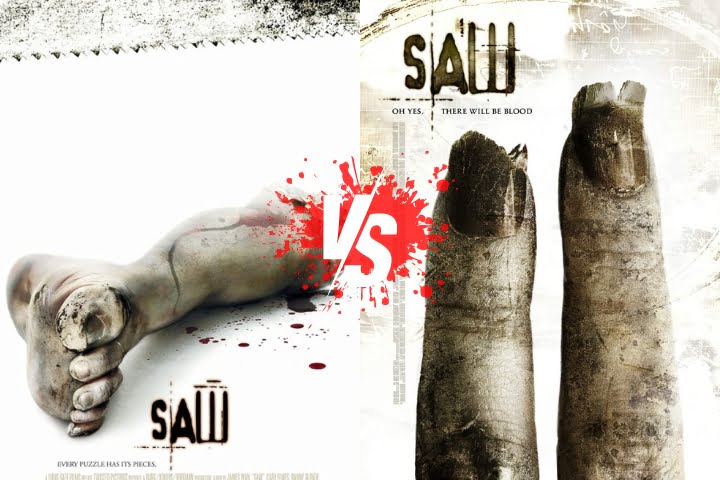
Prepare yourself for a comparative journey through the dark and twisted corridors of two iconic horror films. First up, we have the original “SAW” (2004), a low-budget shocker that carved out a new niche in the genre. Then, stepping into the arena is its more elaborate successor, “SAW II” (2005), which took the terror to new heights. We’ll break down the essentials: budget, plot, box office success, and critical reception. At the end, we’ll give our take on which film we think is the best!
Budget:
- SAW (2004): The original “Saw” movie had a relatively low budget, estimated at around $1.2 million. This tight budget necessitated a very short shooting schedule and limited locations.
- SAW II (2005): With the first film’s success, “Saw II” had a larger budget to work with, estimated at around $4 million. This allowed for a more elaborate set design and more complex traps.
Box Office:
- SAW (2004): The first “Saw” movie was a box office success, grossing over $103 million worldwide. Its low budget and high return made it one of the most profitable horror movies of its time.
- SAW II (2005): “Saw II” also performed well at the box office, grossing over $147 million worldwide. The success of the sequel solidified “Saw” as a horror franchise.
Plot:
- SAW (2004): The plot revolves around two men who wake up in a dilapidated bathroom, chained by their ankles to pipes. Between them lies a dead body holding a tape recorder and a handgun. They soon learn they are part of a sadistic game orchestrated by the Jigsaw Killer, who is testing their will to live through a series of moral and physical challenges.
- SAW II (2005): In the sequel, a new group of people finds themselves trapped in a house filled with deadly traps. The main character, Detective Eric Matthews, can locate the house and confronts the Jigsaw Killer, only to discover that his son is trapped inside. The plot unfolds with twists as the characters navigate the traps and the detective tries to rescue his son.
Reception:
- SAW (2004): Directed by James Wan and written by Leigh Whannell, the first “Saw” film was noted for its unique approach to the horror genre. Critics and audiences were polarized in their opinions. On the one hand, the movie was lauded for its originality, twist ending, and the psychological elements that distinguished it from other slasher films of the time. It was seen as a breath of fresh air in a genre that had become somewhat stale. The claustrophobic setting, the emphasis on the characters’ choices, and the moral dilemmas they faced were aspects that received positive attention.
However, on the other hand, some critics took issue with the film’s graphic content and reliance on shock value. Some felt that the movie was too gruesome and that it prioritized gore over storytelling. This led to some labeling it as the start of the “torture porn” subgenre, which focused on the depiction of extreme violence. Despite the mixed reviews, the film’s impact was undeniable, and it quickly gained a cult following, with particular praise often directed toward the performance of Tobin Bell as the Jigsaw Killer.
- SAW II (2005): With Darren Lynn Bousman taking over the directorial reins for the sequel, “Saw II” expanded on the universe created by the first film. The sequel was received with a similar level of polarization. It retained much of the original’s gruesome spectacle and intense scenarios, which pleased fans of the first movie. The increased budget allowed for more complex traps and a larger cast of characters, which added to the scale and ambition of the film. The narrative twist at the end of “Saw II” also contributed to its appeal, as it continued the series’ tradition of surprising audiences.
Critics, however, continued to express concerns over the film’s violent content. Some felt that the sequel doubled down on the gore at the expense of the suspense and psychological horror that had been a significant part of the original’s appeal. There were also comments about the film’s pacing and character development, with some suggesting that the focus on traps and deaths left little room for audience attachment to the characters. Nevertheless, “Saw II” was a commercial success and maintained the franchise’s popularity, which led to numerous sequels and a solidified fan base.
Our Take:
While SAW franchise has become known for its elaborate traps and extreme gore, the humble beginnings of SAW 1 are truly special. The idea of waking up chained to a pipe with a dead guy in the middle of the room is incredibly creepy and sets up for an effective twisted ride. Going into SAW 1 completely blind and experiencing the twist is hard to replicate. “SAW II” (2005) broadens the scope with grander traps and a wider cast, but in doing so, it trades some of the original’s eerie minimalism for spectacle. Despite the sequel’s ambitions, the haunting simplicity and raw narrative punch of the first film remain the gold standard.


