onterror.com is reader supported. When you buy through links on our site we may earn an affiliate commission. Learn more
Hellraiser 1 vs Hellbound: Hellraiser 2 a Cenobite Showdown
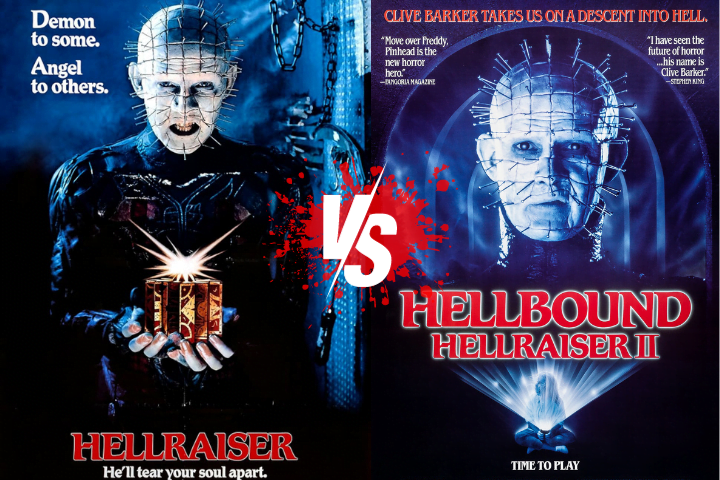
Source: Entertainment Film Distributors & New World Pictures
Dare to unlock the puzzle box of terror as we delve into a chilling comparison between two iconic staples of horror: “Hellraiser,” the groundbreaking original that introduced us to the twisted world of Cenobites, and its ambitious follow-up, “Hellbound: Hellraiser II.” Prepare for a spine-tingling journey through their budgets, box office screams, twisted plots, and the shivers they sent down critics’ spines. Which of Clive Barker’s macabre masterpieces will claim the throne in this duel of the damned? Let the showdown begin!
Budget:
- Hellraiser (1987): Directed by Clive Barker, the first film had a relatively modest budget estimated to be around $1 million. This was Barker’s directorial debut, and the film had to rely on creative low-budget effects and makeup.
- Hellbound: Hellraiser II (1988): The sequel, directed by Tony Randel, had a larger budget due to the success of the first film. Estimates for the sequel’s budget vary but are generally reported to be around $3 million, which allowed for more elaborate special effects and set designs.
Box Office:
- Hellraiser: Despite its low budget, “Hellraiser” was a commercial success. It grossed approximately $14.5 million at the box office, a significant return on its investment.
- Hellbound: Hellraiser II: The sequel also performed well at the box office, grossing around $12 million. While this was a slight decrease from the first film, it still represented a successful return on its larger budget.
Plot:
- Hellraiser: The plot centers around a puzzle box that opens a gateway to a hellish dimension inhabited by Cenobites, creatures dedicated to exploring the limits of human pain and pleasure. The story follows Frank Cotton, who is resurrected from the dead and seeks to escape the Cenobites’ clutches with the help of his former lover, Julia.
- Hellbound: Hellraiser II: The sequel expands on the first film’s mythology, delving deeper into the hellish world of the Cenobites. The story follows Kirsty Cotton, the protagonist from the first film, as she is admitted to a psychiatric hospital where the head doctor is obsessed with the puzzle box. Kirsty and another patient, Tiffany, are drawn into the labyrinthine world of the Cenobites, leading to confrontations with new horrors.
Memorable Quotes
Hellraiser (1987):
- “We have such sights to show you!” – Pinhead
- “No tears, please. It’s a waste of good suffering.” – Pinhead
- “The box… you opened it, we came.” – Pinhead
- “It’s not hands that call us. It’s desire.” – Pinhead
- “Demons to some, angels to others.” – Pinhead
- “I am in hell. Help me.” – Frank Cotton
- “Come to Daddy.” – Frank Cotton
Hellbound: Hellraiser II (1988):
- “Your suffering will be legendary, even in hell!” – Pinhead
- “It is not hands that summon us. It is desire.” – Pinhead (This line is a slight variation of a similar quote from the first film.)
- “And to think… I hesitated.” – Kirsty Cotton, after dispatching a villainous character
- “Oh, no tears please. It’s a waste of good suffering!” – Pinhead (This line is a reprise from the first film.)
- “I recommend… amputation!” – Channard Cenobite
- “Tiffany, it’s time to play.” – Pinhead
- “How can you die when you’ve never been born?” – Channard Cenobite
Reception:
- Hellraiser (1987): Upon its release, “Hellraiser” garnered mixed reviews from critics, but it has since been reassessed and is now widely regarded as a classic of the horror genre. Critics praised Clive Barker’s fresh and imaginative approach to horror, the film’s atmospheric tension, and its groundbreaking special effects, particularly the gruesome makeup of the Cenobites.
The character of Pinhead, played by Doug Bradley, became an iconic villain in horror cinema. Detractors at the time criticized some of the acting performances and the pacing, but these elements have largely been overshadowed by the film’s cult status and its influence on the genre. The movie is appreciated for exploring themes such as desire, pain, and the human condition, wrapped in a gruesome, otherworldly narrative.
- Hellbound: Hellraiser II (1988): The sequel received a mixed reception upon release, but like its predecessor, it has been subject to more positive reevaluation. Critics acknowledged the film’s ambitious scope and the expansion of the dark and complex universe established in the first movie. The sequel’s special effects and set designs were particularly lauded, creating a visually compelling depiction of the Cenobites’ dimension.
However, some reviewers felt that the plot was convoluted and that the film relied too heavily on graphic violence and spectacle at the expense of character development and a coherent narrative. Despite these criticisms, “Hellbound: Hellraiser II” is praised for its contributions to the franchise’s lore and for further developing the enigmatic character of Pinhead. It remains a favorite among fans for its bold storytelling and haunting visuals.
Our Take
Comparing Hellraiser 1 and 2 is a difficult task. Hellraiser 1 has a more tightly knit script that successfully immerses you into the dark world with few moments that might distract you from the story. This allows you to fully appreciate the lore of the Hellraiser universe.
On the other hand, Hellbound: Hellraiser II does an outstanding job of expanding the universe and has some incredible moments, particularly when exploring hell. However, the movie does have some cheesy one-liners and awkward scene transitions that take you out of the experience. Ultimately, Hellraiser 1 is the winner!